Summary:
Implementation Guidelines for ...
Implementation Guidelines for Security Anti-Riot Equipment Usage Training
Security anti-riot equipment usage training is a key link to enhance security personnel's emergency response capabilities. This article will systematically elaborate on scientific and efficient training methods from four dimensions—theoretical teaching, practical training, legal norms, and scenario-based drills—helping security teams build a standardized, professional, and compliant equipment operation system.
I. Theoretical Teaching to Lay a Solid Foundation
1.1 Equipment Cognition Training
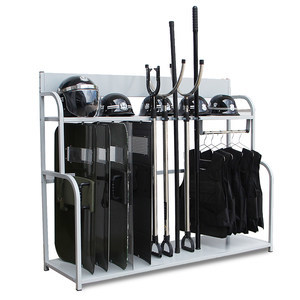
Use multimedia courseware to systematically explain the technical parameters of anti-riot equipment such as anti-riot shields (impact resistance ≥178J), anti-riot steel forks (complying with GA 1149-2014 standard), and anti-riot arresters. Focus on analyzing key data such as the effective range (2-3 meters) and action duration (15-30 minutes) of tear gas sprays, and strengthen theoretical cognition through video materials from the Ministry of Public Security's "Single Police Equipment Usage Specifications".
1.2 Safe Operation Norms
Emphasize the "Three Prohibitions" principle for equipment usage: prohibit using riot-control equipment on vital human organs, prohibit over-range use of non-lethal equipment, and prohibit illegal modification of equipment structure. Combined with Article 29 of the "Regulations on the Administration of Security Services", clarify the legal consequences of illegal use of police equipment.
II. Hierarchical Practical Training System
2.1 Decomposition of Basic Movements
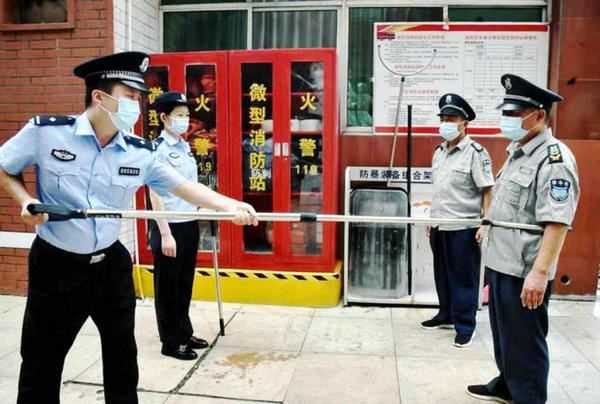
Carry out phased training on three-level defensive postures for anti-riot shields: Level 1 Alert Posture (shield held obliquely at 45°), Level 2 Defense Posture (shield blocking frontally), and Level 3 Advancement Posture (shield pressed against the shoulder for forward movement). Use training-specific rubber equipment to ensure the standardization rate of movements reaches over 90%.
2.2 Combined Tactical Drills
Design the "1 Shield + 2 Forks + 3-Person Team" tactical formation, and improve team collaboration capabilities through pressure test training. Introduce the "Red-Blue Confrontation" model from the Israeli International Security Academy to test the efficiency of equipment usage in simulated riot scenarios.
III. Legal Norms Throughout the Whole Process
3.1 Definition of Usage Authority
With reference to Article 16 of the "Regulations on the Use of Police Equipment and Weapons by People's Police", clarify that security personnel can only use anti-riot equipment when stopping ongoing violent criminal acts. Through the analysis of relevant cases from the Supreme People's Court, explain the legal risks of using equipment beyond the necessary limit.
3.2 Evidence Preservation Training
Teach the linked usage method of law enforcement recorders and anti-riot equipment, focusing on training the standard process of "warning before use—recording during use—reporting after use" to ensure the integrity of the evidence chain meets the "Provisions on the Work of On-Site Law Enforcement Audio-Visual Recording by Public Security Organs".
IV. Scenario-Based Simulation to Strengthen Actual Combat
4.1 Pressure Environment Training
Set up complex environments such as high-decibel noise (≥90dB), strong light interference (20000-lumen stroboscope), and narrow spaces, and use 3D simulation systems to restore typical scenarios such as stations and shopping malls. Evaluate the psychological quality of trainees through heart rate monitoring equipment and eliminate those with unqualified stress responses.
4.2 Annual Retraining Mechanism
Establish the "721 Competence Maintenance Model": 70% of the time each year to consolidate basic skills, 20% to learn new equipment (such as electromagnetic pulse jammers), and 10% to participate in cross-regional joint drills. Referring to the recommendations of the International Foundation for Protection Officers (IFPO), maintain special training of no less than 8 hours per quarter.
A scientific training system should include a three-dimensional evaluation standard: theoretical assessment (30%), practical evaluation (50%), and psychological assessment (20%). It is recommended to introduce the British BS 7499:2020 standard certification system and regularly invite special police instructors from public security organs for professional supervision to ensure the training quality continuously meets the requirements of Level 3 or above of the "National Vocational Skill Standards for Security Guards". Through a systematic, standardized, and regular training mechanism, effectively improve the professional level of the security team.
Ketuo Police Service Hotline: 13625189345





 Access Mobile Version